The Art of Making
The Paper and the Ground
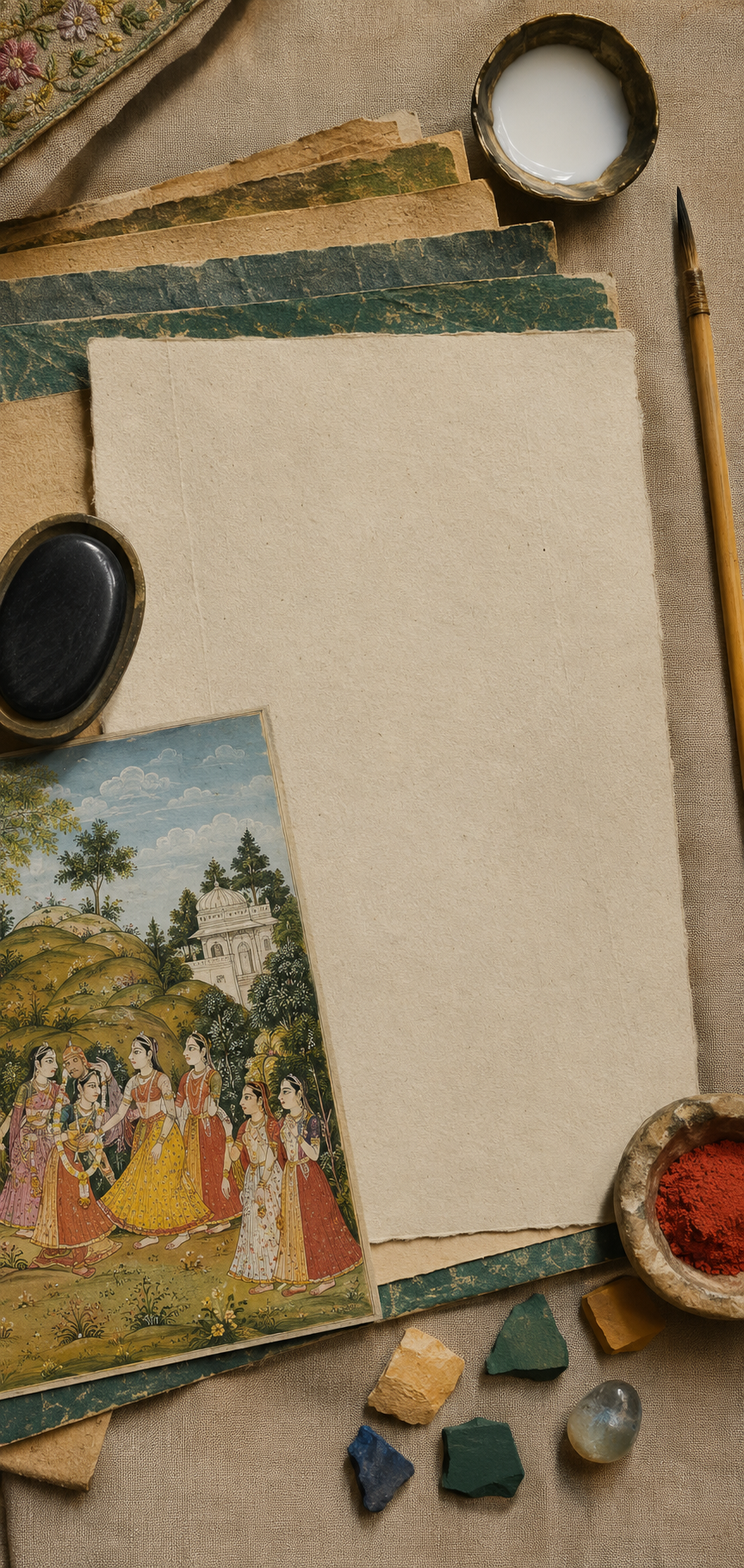
Most Pahari paintings were executed on wasli — a laminated sheet made by pasting several layers of paper together, then rubbing the surface smooth with a polished agate stone until it acquired a near-enamelled finish. This process, repeated many times, created a ground that was simultaneously absorbent enough to hold paint and smooth enough to accept the finest line. Some works were executed on cloth, primed with chalk and gum. A few were painted on ivory in the later period, under European influence.
The Pigments
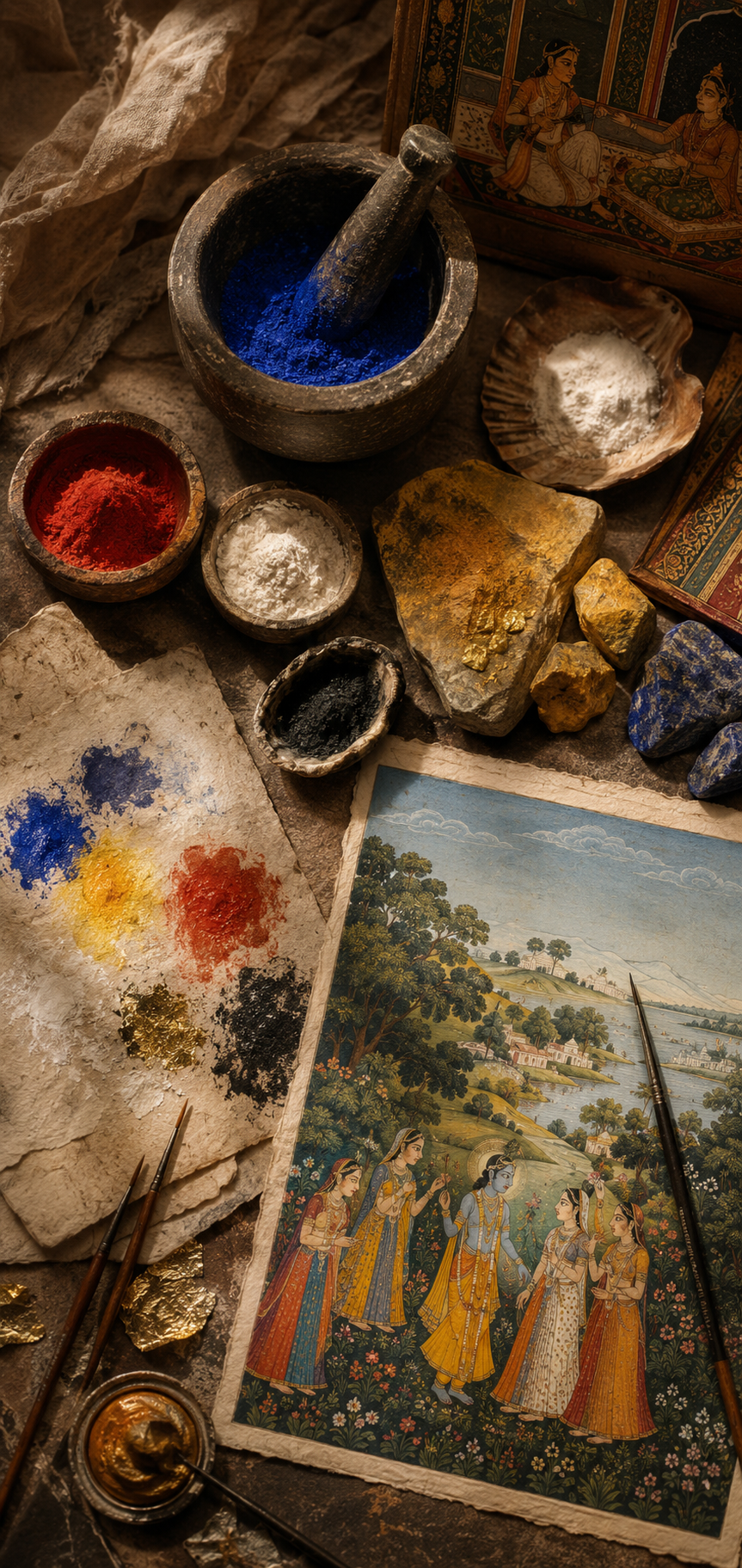
The colours of Pahari painting were not bought from a shop. They were prepared. Lapis lazuli from Afghanistan — the brilliant blue that gives Kangra night its depth — was ground by hand, washed in water to separate grades of fineness, and mixed with gum arabic in precise proportions. Vermilion came from mercury sulphide, mined and purified. White came from ground conch shell or lead carbonate. Black from lampblack, the soot of burned oil lamps, collected on copper plates. The brilliant orange-yellow of Basohli grounds came from orpiment, a naturally occurring arsenic mineral. Gold was beaten to impossible thinness and ground to a powder mixed with gum.
The Brushes
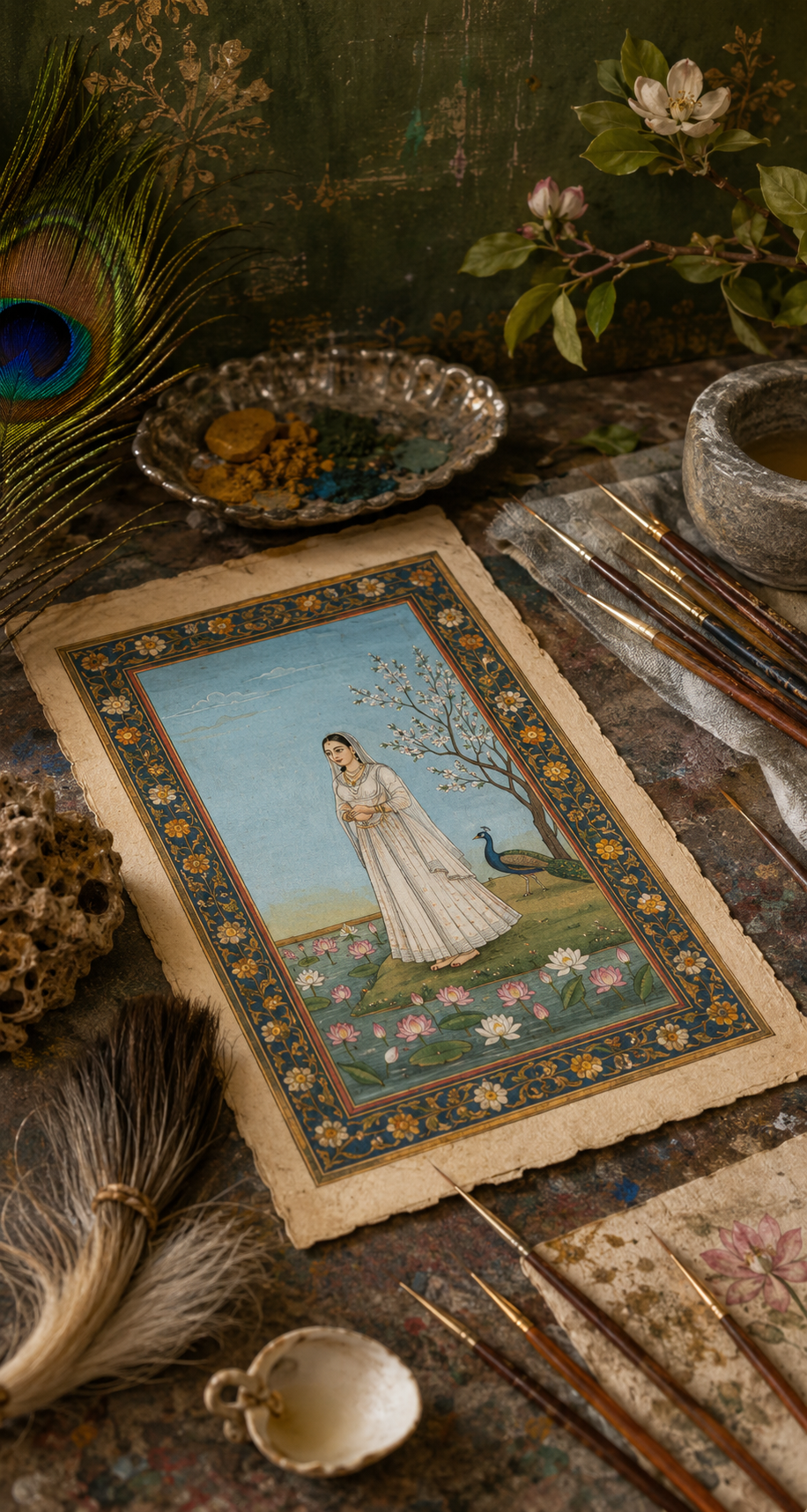
The brushes of Pahari painting were almost unimaginably fine. Made from the tail hairs of squirrels, sometimes from the hairs of cat or mongoose, they were formed into points so fine that a single hair could be drawn across the surface to create a line no thicker than a human hair. The finest brushes — used for the single-hair outlines of faces, the individual lashes of a eye, the veins of a lotus petal — might contain as few as three or four hairs. To work with such tools required not just skill but a particular quality of attention: total stillness, breath control, the ability to make the hand absolutely obedient to the eye.
The Drawing
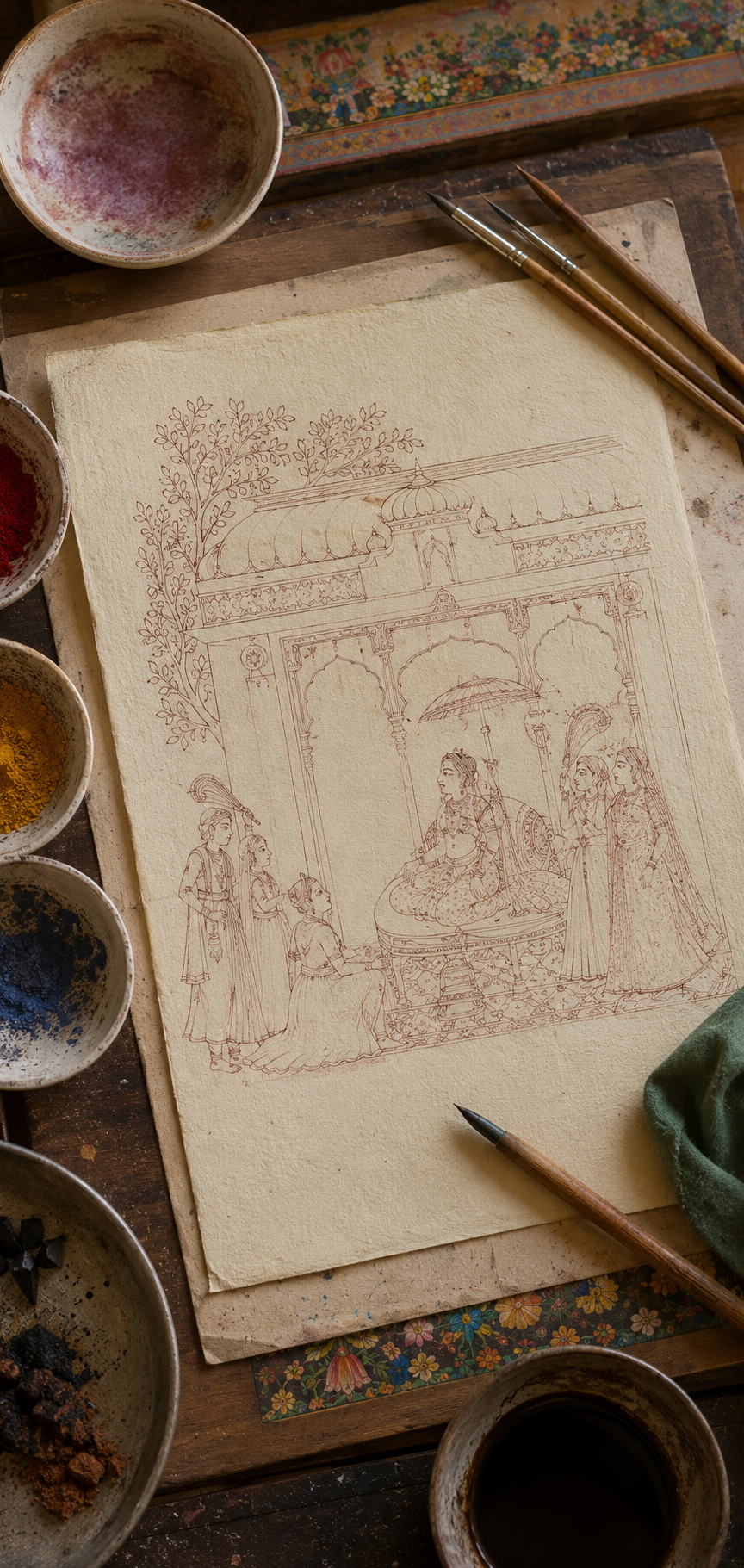
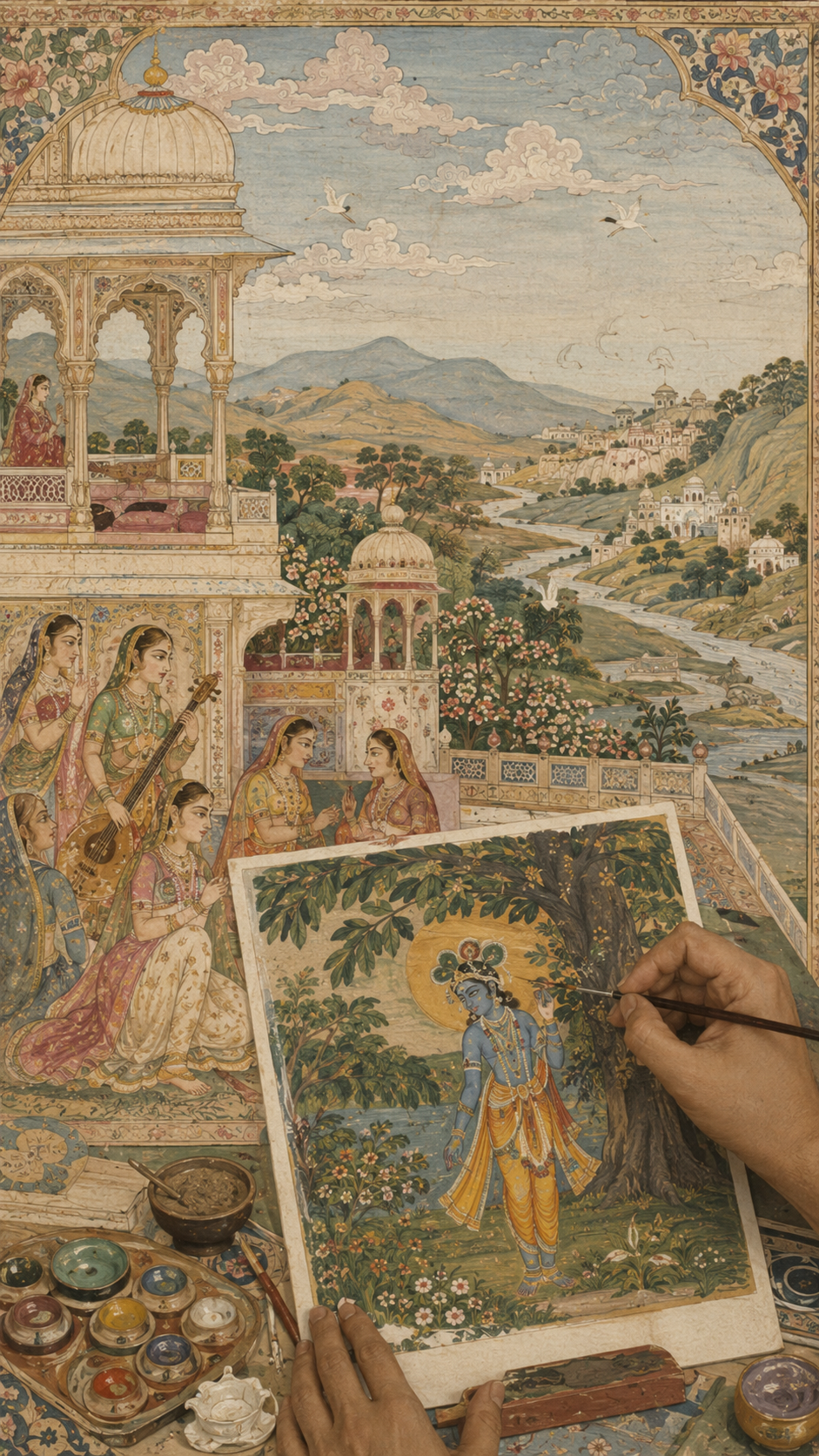
The painting began with a preliminary sketch in charcoal or light red, establishing the composition. This sketch was then refined — sometimes transferred from a master drawing through the pouncing technique, in which tiny holes pricked along the outline allowed charcoal dust to mark the fresh surface. Once the composition was fixed, the drawing was gone over in ink, establishing the final outlines. Only then did colour begin.
The Colouring
Colour in Pahari painting was applied in layers. The first layers were flat washes — establishing the ground of each area. Then came the modelling, with lighter and darker tones layered to create form. Then the detailing — tiny individual strokes that defined fabric texture, plant structure, architectural ornament. The process moved from large to small, from flat to complex, from ground to surface. The final stage — the outlines, the faces, the gold — was the most critical, and was often reserved for the master of the workshop while assistants handled the preparatory stages.
Gold and Final Details
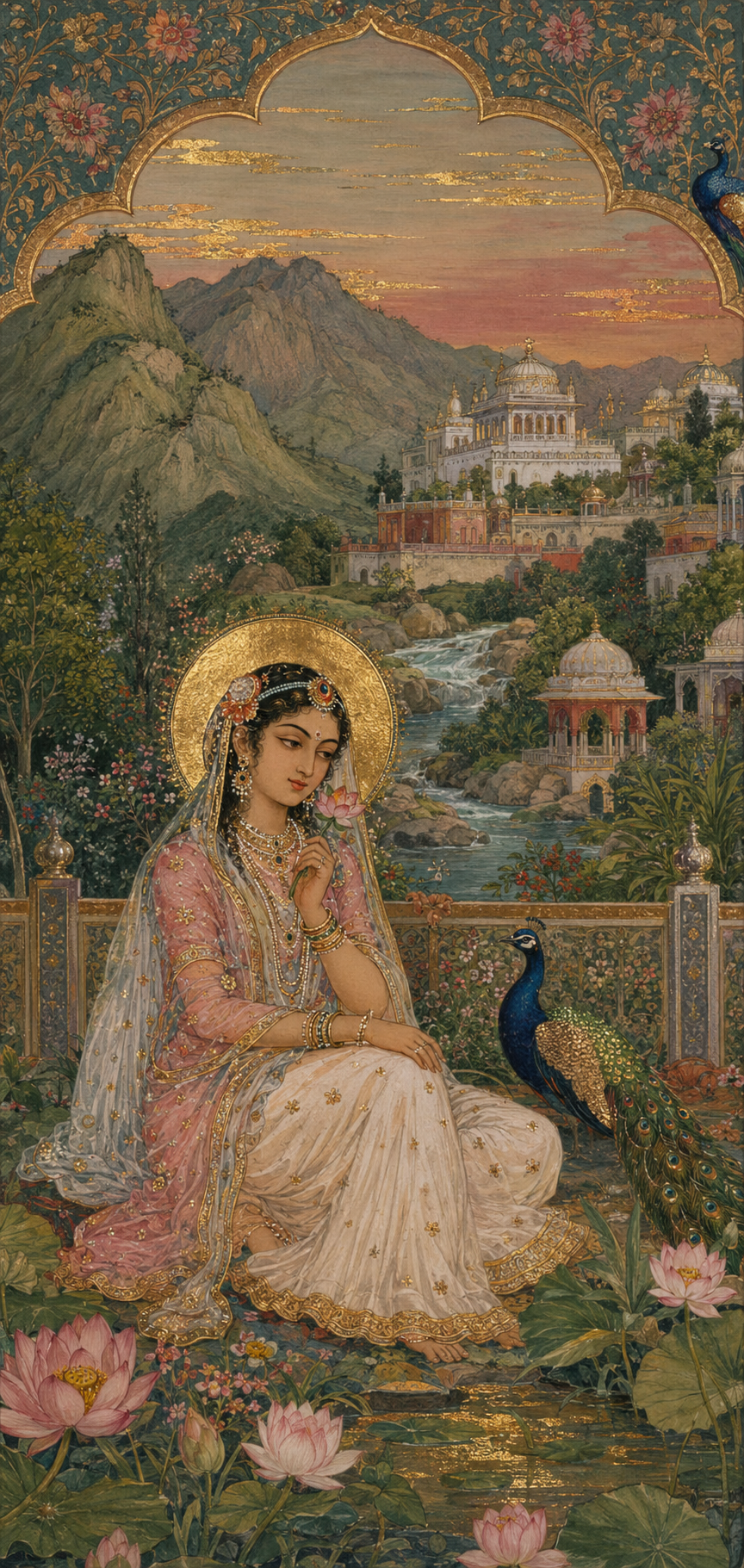
Gold was among the last elements applied. Mixed with gum and applied with a fine brush, it was used for jewellery, halo outlines, architectural details, border decoration, and occasionally the surface of water or the illumination of a night sky. Once dry, it was burnished — polished with an agate tool until it achieved the mirror-bright shine of real metal. Some paintings also used silver for moonlight effects, though silver tarnishes with age and most such passages have oxidised to a soft grey that carries its own beauty.
The Artists and Their Lives
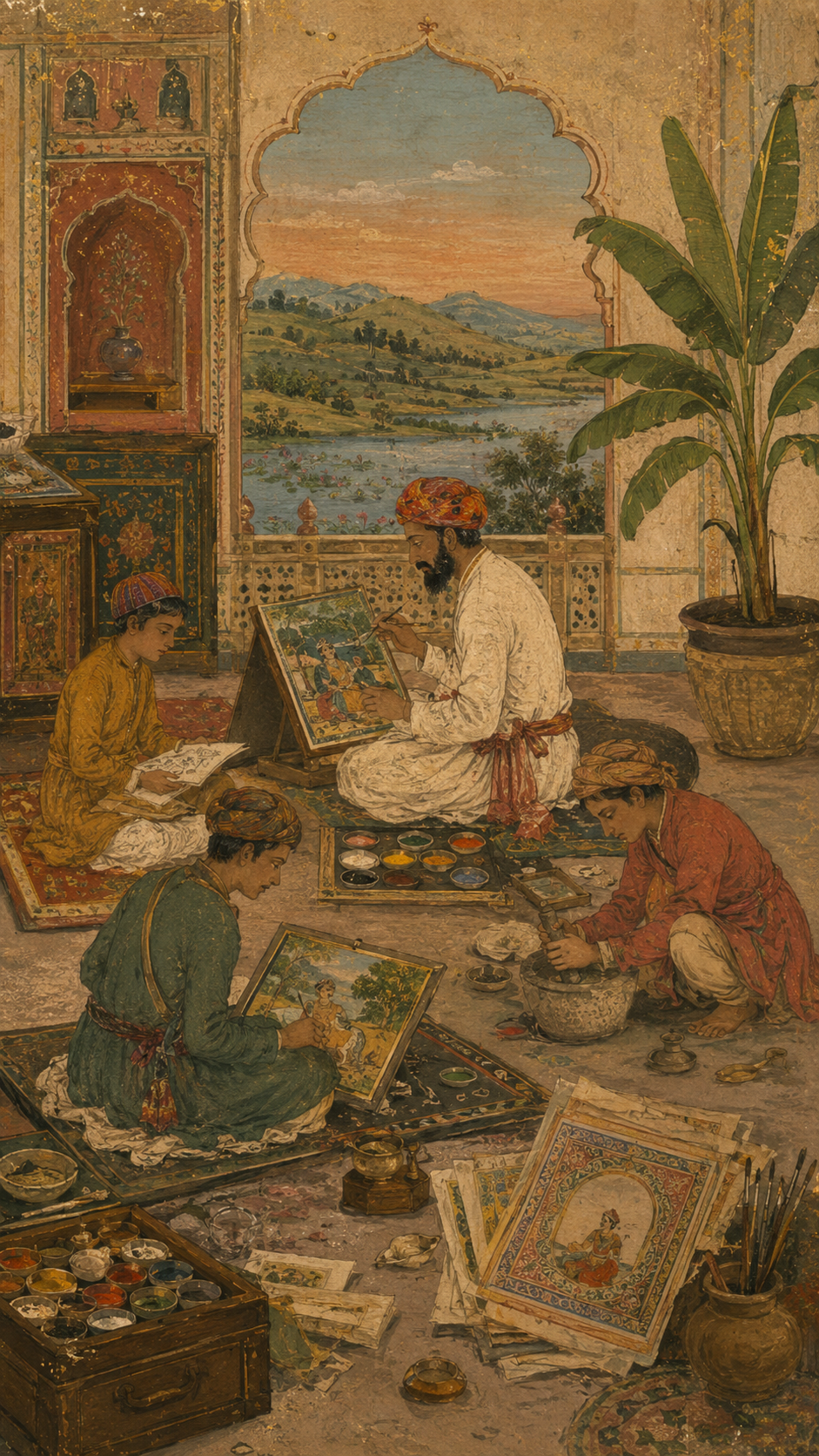
Most Pahari painters remain anonymous. A few names have survived — Nainsukh of Guler, perhaps the greatest individual master of the entire tradition; Manaku, his brother; Purkhu of Kangra; Khushala of Guler. But for most of the thousands of paintings that survive, we have no name, no face, no story. We have only the work. What we do know is that painting in the Pahari courts was a hereditary profession. The great workshops — the Seu family of Guler being the most famous — passed their knowledge through the family line, father to son, generation to generation. Children began their training young, learning to prepare materials, then to paint subsidiary elements, then progressively more complex parts of the composition. A master painter might not execute a complete painting independently until his thirties.